Contact us
Need a problem solved?
Our dedicated experts, located around the world, are here to help.
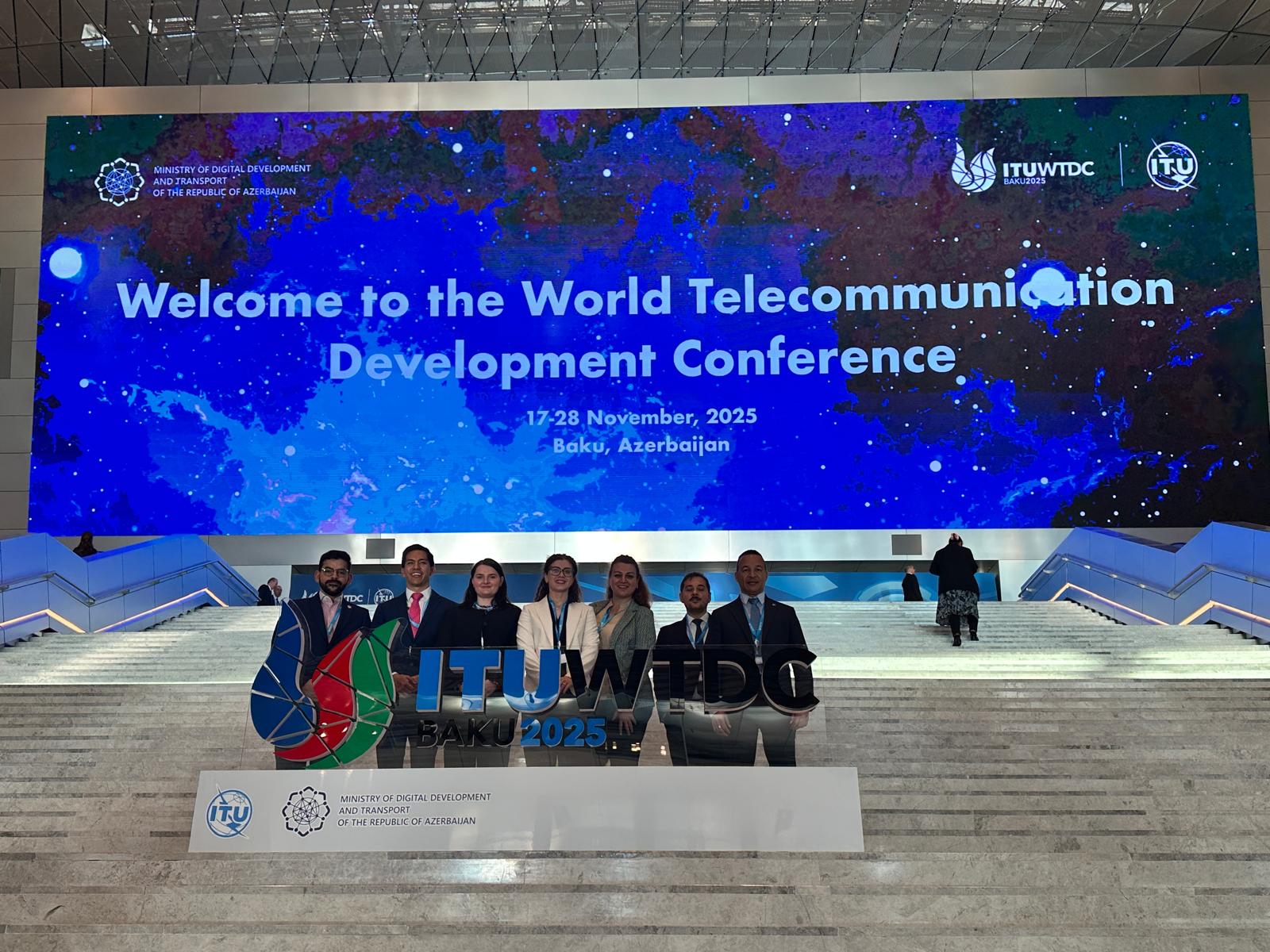
The World Telecommunication Development Conference (WTDC-25) has concluded in Baku, Azerbaijan, and the strategic compass for the next four years within the International Telecommunication Union Development Sector (ITU-D) has been set.
Over the course of two weeks (17 – 28 November 2025), 2,500+ participants from ITU Member States and Sector Members across 150+ countries, gathered to review, update, and approve the Baku Declaration, Action Plan, Resolutions, Study Group Questions, and Regional Initiatives that will drive ITU-D activities over the next four years, leveraging digital technologies to maximize global socio-economic development.
Instrumental to this work will be Ms. Fleur Regina Assoumou Bessou of the Ivory Coast, the newly appointed Chair of the Telecommunication Development Advisory Group (TDAG), and Mr. Roberto Mitsuake Hirayama of Brazil and Dr. Fadel Digham of Egypt, who have been appointed as the Chair of Study Group One and Study Group Two respectively. Each will be supported in their role by a team of Vice-Chairs, composed of representatives from each geographical region.
The main developments and highlights can be summarised as follows:
In addition to revising existing Resolutions, the Conference adopted new Resolutions, calling for the harnessing of Artificial Intelligence (AI) for human development, strengthening the role of ITU regional offices, supporting the reconstruction of damaged infrastructure in Sudan and driving digital transformation efforts in the Pacific through the Lagatoi Declaration.
There were three separate proposals to introduce a new Resolution on low Earth orbit (LEO) satellites, reflecting the lack of support felt by some Member States with regards to deploying satellite communications, despite existing Plenipotentiary and World Radiocommunication Conference Resolutions in place. Whilst some advocated for a new resolution to accelerate universal access, others favoured a more technology-neutral approach and key language from the proposals has been adopted into existing resolutions.
The discussion of the remit of the ITU, and the extent to which its mandate extends to new and emerging technologies, centred around proposals to introduce new resolutions on AI and the metaverse. The former of these proposals was revised and ultimately adopted, underscoring how AI is increasingly seen as a catalyst for digital development, enabling smarter infrastructure and driving innovative connectivity solutions.
The place for language and commitments on climate action and environmental sustainability in ITU-D Resolutions was subject to great debate during the Conference, as Member States sought to balance ambitious environmental goals with equitable access to information and communication technologies. Whilst some Member States were energised from momentum from COP30, others largely disengaged from environment-related discussions. In the final draft of the Baku Action Plan, climate action will be referenced, as will the UN Sustainable Development Goals (SDGs) in the Declaration.
During the conference, the ITU announced three new partnerships:
The High-Level Segment featured addresses by numerous Ministers and Head of Regulators, in which they outlined progress achieved in their country to accelerate digital development efforts and key bilateral and multilateral partnerships. Many digital leaders also took the opportunity to announce their Member State’s candidacy to ITU Council and/or their nomination of a candidate for a position on the Radio Regulations Board (RRB). In total, 37 countries have announced their campaign to be elected to the ITU Council and seven have officially nominated a candidate to sit on the RRB. Elections will take place at the Plenipotentiary Conference, 9-27 November 2026, which will take place in Doha, Qatar.
Access Partnership is an active ITU Sector Member and was on the ground at WTDC-25 contributing to discussions and supporting stakeholders to prepare for and shape the next ITU-D cycle. For more detailed insights from the Conference, ITU-D activities, or preparations for the upcoming Plenipotentiary Conference, please contact Cerys Stansfield at [email protected].




Our dedicated experts, located around the world, are here to help.