Contact us
Need a problem solved?
Our dedicated experts, located around the world, are here to help.
A merger between Grab and GoTo in Indonesia would be one of the most consequential deals for Southeast Asia’s economy. Beyond efficiency gains or balance-sheet considerations, the deal raises a larger strategic question: could it enable the region to nurture a digital champion of comparable scale to global platforms such as Meituan, Uber, or DoorDash?
The regional opportunity has been a central part of the merger’s rationale. Yet public debate has largely framed the issue in binary terms, as either “pro-” or “anti-merger”. This framing risks overlooking the more complex challenges policymakers face. The question is less about whether the merger should proceed, but how it could be shaped to strengthen the broader digital ecosystem, delivering benefits to consumers, workers, merchants, and the wider economy.
This article sets out a framework for thinking about how that success might be achieved.
There are merits in the case for a Grab-GoTo merger: both companies operate under sustained investor pressure to demonstrate a credible path to profitability, and consolidation would allow them to access a larger user base while creating significant cost savings across functions such as consumer acquisition, marketing, engineering, as well as lower infrastructure operating costs. The ongoing financial sustainability of these two giants is a real concern for the millions of gig economy workers in Indonesia who depend on the platforms for their livelihood. The country’s sovereign wealth fund, Danantara, could also be involved in the deal, providing funding by acquiring a minority stake in the merged entity. Furthermore, the efficiencies from a unified platform could improve ride-hailing and delivery services through more efficient logistics handling solutions and trip and order matching. Strategically, this would also allow the region to position itself as home to a digital champion of a similar scale to other global players.
But the possible risks of such a merger also need to be acknowledged. Grab and GoTo are two dominant players competing directly across multiple verticals such as ride-hailing, food delivery, digital payments, and logistics. Bringing them together would result in further market concentration for some of these services, creating a new entity with up to 99% market share in both ride-hailing and food delivery in Indonesia.[1] Given their regional footprint, such considerations go beyond Indonesia, with a new regional entity potentially holding around 85% of the ride-hailing market share in Southeast Asia. The concern is that this could erode competitive pressure, leading to lower service quality, reduced incentives to innovate, and weakened price competition. For consumers who rely on these services and have limited alternatives, this could translate into fewer price promotions, higher ride and food prices, and increased delivery fees. Strong network effects would also make it difficult for users to switch platforms, locking them into a dominant ecosystem.
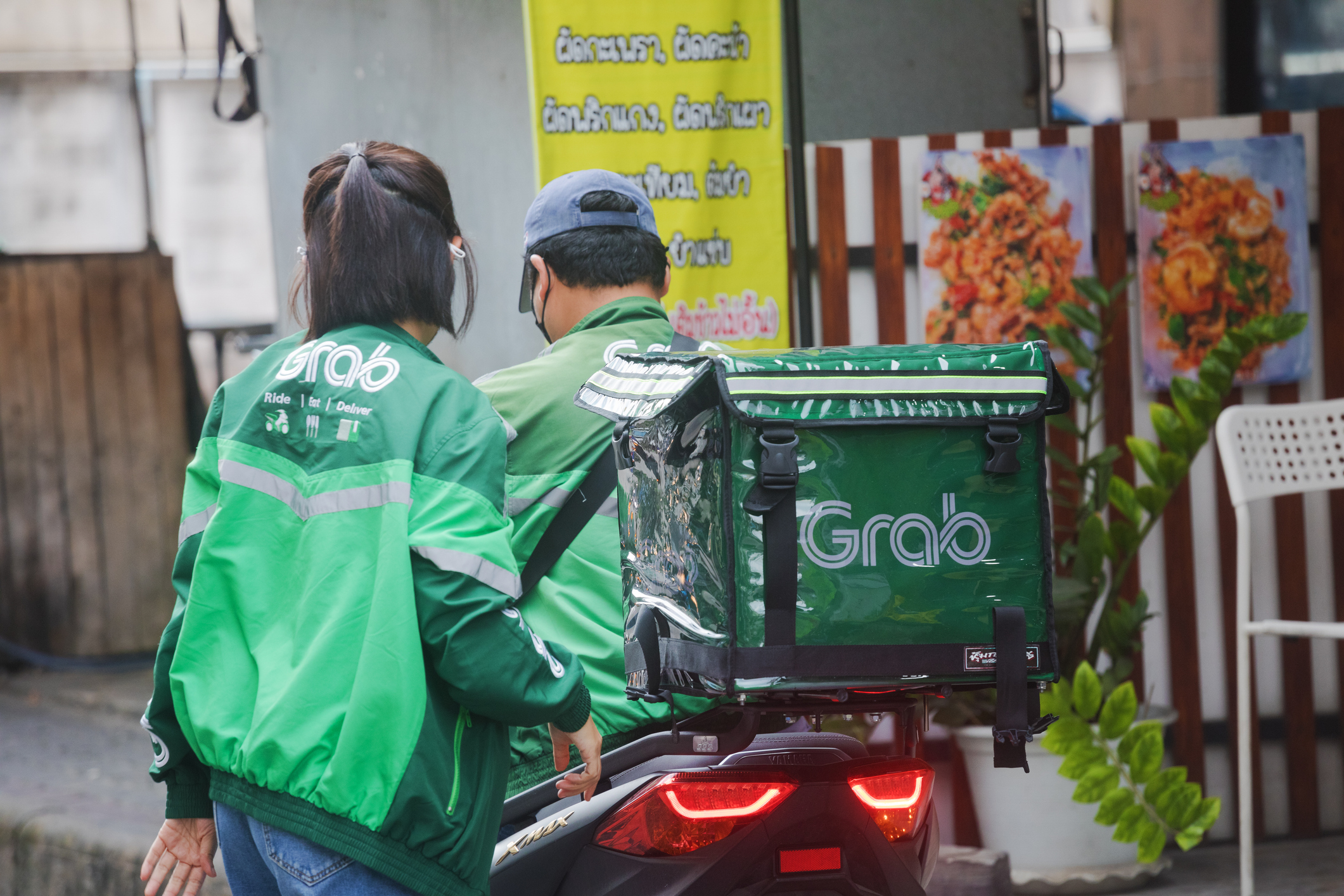
For gig workers, the implications may be even more acute: with fewer alternatives, drivers and riders would have reduced bargaining power, leading to higher commissions and lower incentives over time. This issue would be particularly pronounced in Indonesia where over 4 million individuals rely on gig work. Looking forward, consolidation could also raise barriers to entry for new platforms, as they would be required to overcome hurdles such as significant scale advantages, an entrenched user base, and the need to compete against bundled services. This further weakens competitive pressure and may exacerbate the dominance of incumbent platforms.
Beyond platform and market-specific effects, a material reduction in market competition in services that are important facilitators of economic activity can have far-reaching implications for the wider economy. The combined entity would have a sizeable stake in the livelihoods of millions of drivers and micro, small and medium enterprises (MSMEs) in Indonesia. Services offered by the platform such as ride-hailing, food delivery, and e-commerce are also playing an increasingly significant role in supporting everyday consumption, urban mobility, and small business activity. As a result, any changes in pricing, commissions, or access to these services could affect household spending, small business viability, and labour participation that will extend well beyond the platforms.
Two case studies could serve as examples of potential scenarios.
Grab and Uber in Singapore: When Grab acquired Uber’s Southeast Asia operations in 2018, the Competition and Consumer Commission of Singapore (CCCS) concluded that the deal was anti-competitive in nature. Prices rose, incentives fell, and competition was found to have substantially lessened in the market, to the detriment of drivers and riders. Network effects further entrenched Grab’s market position, and while new players entered the market, it was challenging for them to scale and expand. However, the competition authority took steps to mitigate the transaction’s impact, including ensuring that drivers are free to use any platform, removing Grab’s exclusivity agreements with taxi fleets, and preventing the company from modifying its pre-merger pricing algorithms. Today, other players such as Tada and Gojek operate in Singapore’s market as well.
Meituan in China: Meituan’s dominance in food delivery in China (often exceeding 70% of market share) has drawn scrutiny over merchant fees, rider conditions, and other unfair exclusionary practices. This illustrates how a single dominant platform can generate efficiency, yet has the potential to cause concerns around labour welfare, pricing power, and market conduct. In recent years, the State Administration for Market Regulation (SAMR) has launched several antitrust investigations into Meituan, with fines meted out for unfair practices, such as those that force merchants into exclusionary deals.
Scale has the potential to create efficiencies, but scale alone would not guarantee the public good. Adequate regulatory oversight will be essential to safeguarding the public interest and ensuring that such efficiencies benefit the economy, the industry, consumers, workers, and small businesses.
Framing the discourse simply as either “pro- or anti-merger” would do a disservice to the potential good and harm that such a merger could bring. Any consideration is necessarily a balance. Regulators will assess this deal by considering the potential changes in market dynamics, which are challenging to predict. So, the starting point should be what safeguards are necessary to protect the public interest, and consideration should be given to all participants of these platforms – consumers, gig workers, and the small businesses who rely on their services:
A Grab-GoTo merger may support the ongoing financial sustainability of these two platforms. However, given that the services provided by these two platforms are key enablers of mobility, employment, and commerce for millions daily, it will be crucial to assess this move from a broader perspective. In this regard, the regulatory considerations must examine the impacts on the platform ecosystems and those who depend on it for the public interest.
A modified version of this article was published in the Jakarta Post on 29 December 2025.
[1] News outlet Kompas reported that based on order volume, Grab has 63 per cent of the rail-hailing market share in Indonesia, while GoTo has 36 per cent. In terms of food delivery volume, Grab has a 47 per cent market share and GoTo has 52 per cent.
[2] Ojol is the local name for app-based motorcycle taxis.





Our dedicated experts, located around the world, are here to help.