Contact us
Need a problem solved?
Our dedicated experts, located around the world, are here to help.
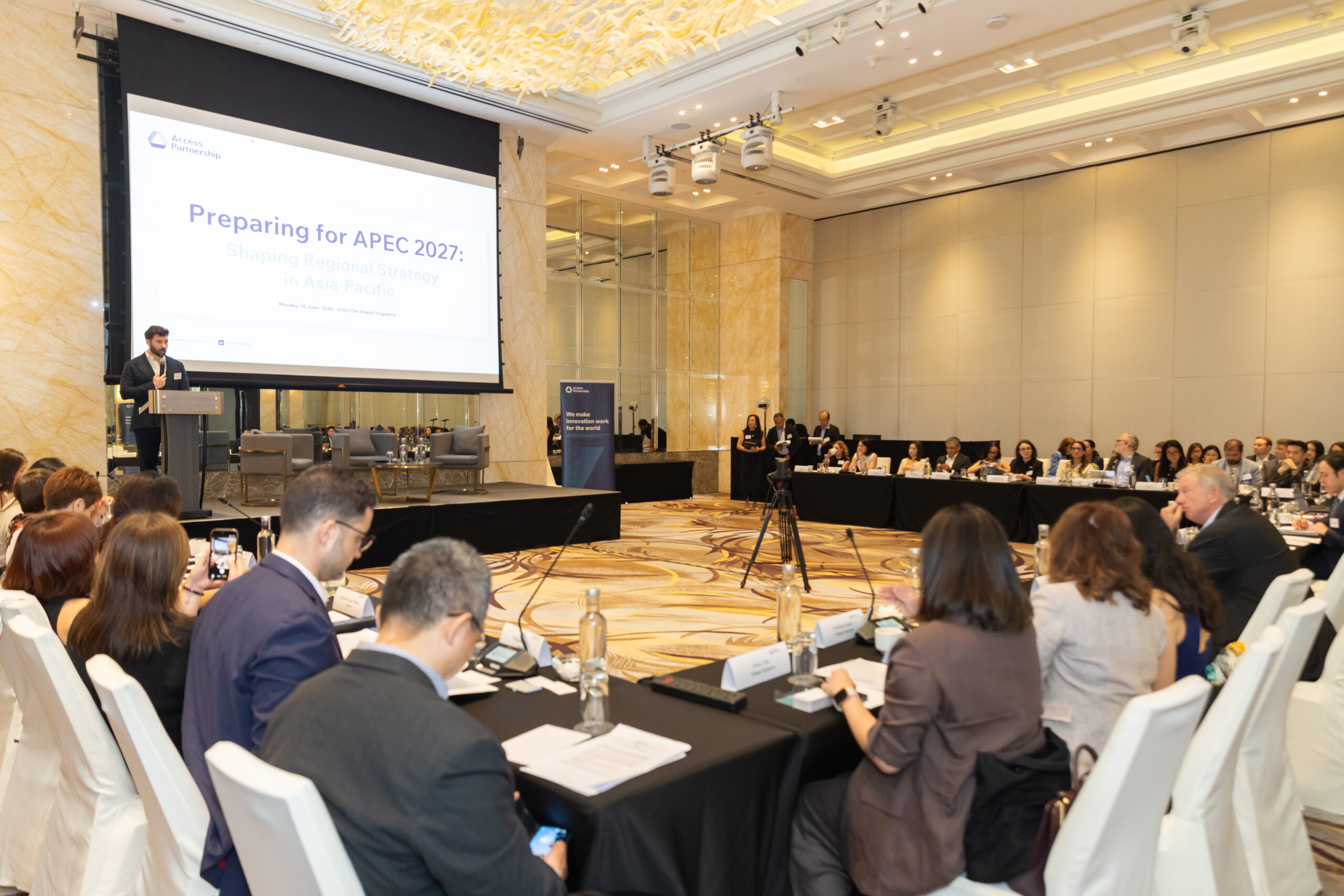
As Vietnam prepares to host the Asia-Pacific Economic Cooperation (APEC) in 2027, how can the forum remain a compelling platform for private sector engagement against a backdrop of intensifying geopolitical and geoeconomic competition?
On 15 June, Access Partnership convened a roundtable in Singapore to examine how APEC 2027 can serve as a platform for regional policy dialogue and address shared business challenges under the Chatham House Rule. The event was attended by the APEC Secretariat, regional foreign-policy voices, senior representatives of Vietnam’s incoming host team, and around forty leading companies and industry associations from across trade, technology, and healthcare.
Discussion opened with a reminder of what APEC is, and what it is not. As a non-binding, consensus-based forum, APEC is less focused on negotiating formal agreements and more on shaping policy direction through dialogue, peer exchange, and capacity-building. Over time, this process has played a meaningful role in informing regulatory approaches, aligning priorities across economies, and translating shared objectives into practical policy actions. With progress stalled at the World Trade Organisation, participants noted that APEC’s convening role has become more important.
A fireside discussion between Bilahari Kausikan, former Permanent Secretary at Singapore’s Ministry of Foreign Affairs, and Adam Schwarz, CEO of Asia Group Advisors, an Access Partnership company, framed much of the day. Several points were emphasised:
Deputy Director General Nguyen Dang TRUNG from the Department of Economic Diplomacy at Vietnam’s Ministry of Foreign Affairs set out a preview of where the country is considering focusing its 2027 agenda. Vietnam framed its host year against a domestic ambition of more than 10% annual GDP growth over the next five years, powered by a new growth model and significant domestic reforms.
The Vietnam delegation indicated that, based on ongoing consultations with member economies, themes are shaping up to include a focus on: science, technology and innovation; digital transformation; and economic and trade connectivity, with an emphasis on supply-chain resilience. Workforce and the future of work, the role of AI, and the care economy were also flagged as emerging topics.
Vietnam was clear that priorities remain provisional and that it is seeking private-sector input to shape them. The APEC CEO Summit is expected to be held in Phú Quốc in November 2027. A Science Week is expected to be organised in May. Four anchors emerged from the wider discussion:
Our roundtable surfaced clear private-sector priorities across three broad themes:
At Access Partnership, we specialise in facilitating coordination between the public, private, and multilateral sectors. With a long-standing relationship with APEC, we continue to work closely with key stakeholders to advance public and private sector priorities. To find out how we can support you to succeed, please get in touch.






Our dedicated experts, located around the world, are here to help.