Contact us
Need a problem solved?
Our dedicated experts, located around the world, are here to help.
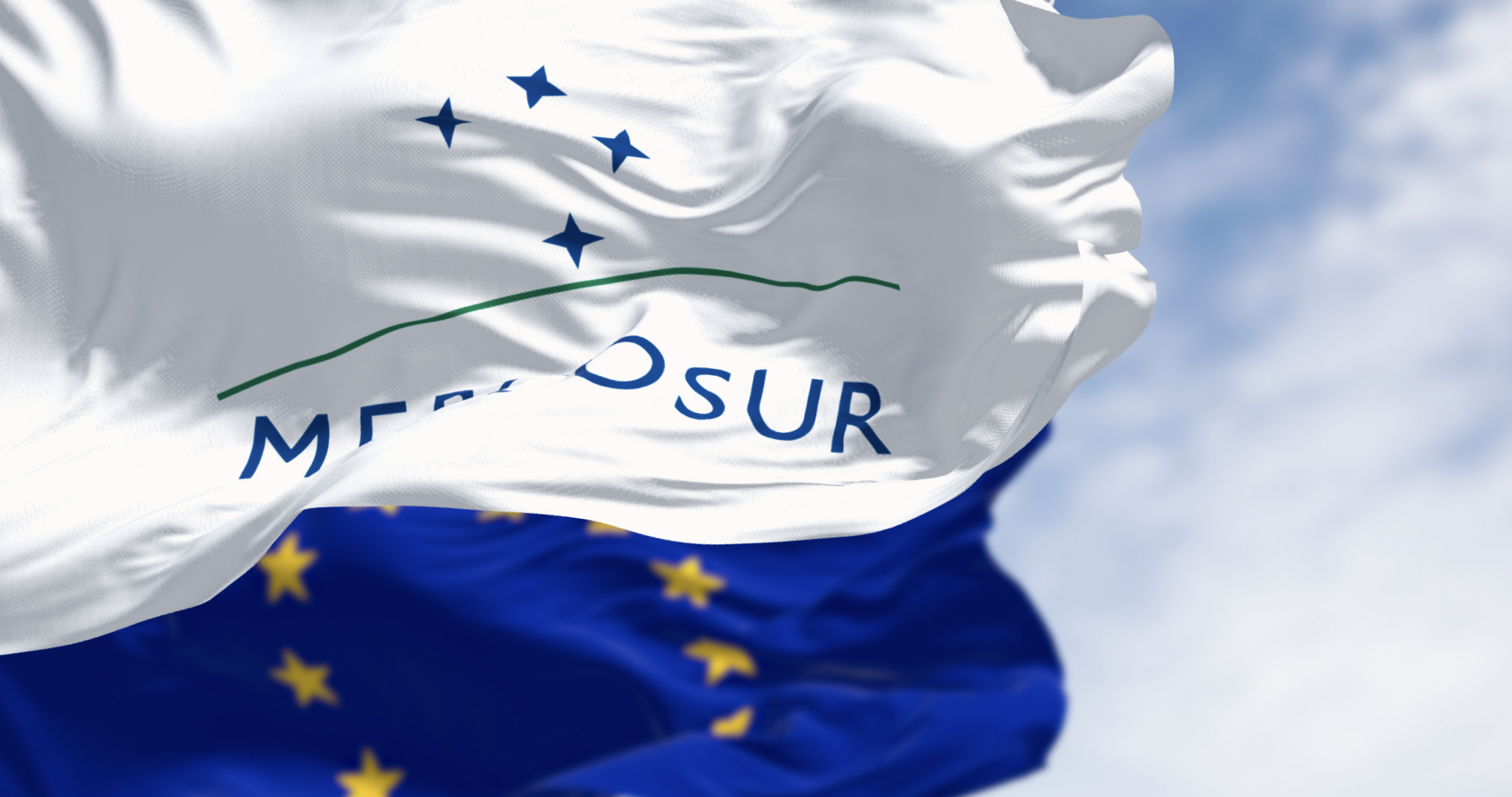
On 9 January 2026, the EU Council authorised signature of the EU-Mercosur Partnership Agreement (EMPA) after 26 years of negotiations. The agreement was finalised at the Mercosur Summit in Montevideo on 6 December 2024, and consists of 20 main chapters (23 including provisions) along with various annexes and supplementary documents. It is expected to profoundly modify the economic relations between Mercosur (Brazil, Argentina, Paraguay, and Uruguay) and the 27 member states of the European Union.
The agreement links economic blocs with approximately 700 million people and a combined GDP of approximately USD 22 trillion. European Commission President Ursula von der Leyen and European Council President António Costa will travel to Paraguay on 17 January for the formal signing ceremony. Once signed, the ratification drama will then begin: the agreement requires European Parliament ratification before entry into force, with implementation timelines phased over 15 years for tariff reductions, as well as ratification by all EU member states and Mercosur parties. An Interim Trade Agreement (ITA) will remain in effect until it is superseded by the entry into force of the full partnership agreement.
The agreement reflects EU efforts to diversify trade relationships and reduce dependence on Chinese supply chains, particularly for critical minerals essential to battery manufacturing. Commission officials also framed it as a response to US trade policy uncertainty and as a statement in favour of rules-based multilateralism at a moment when global trade patterns are fragmenting.
For Mercosur countries, the agreement provides diversified market access to 451 million EU consumers and reduces dependency on any dominant trading partner. This is particularly significant for Brazil, the bloc’s largest economy, which increases access to European regulatory expertise and investment capital.
The EU-Mercosur Partnership Agreement creates a comprehensive trade and cooperation framework that eliminates tariffs, opens services markets, aligns intellectual property standards, and establishes a platform for political dialogue and sectoral coordination between the two blocs. Beyond trade, the agreement strengthens cooperation in areas such as sustainable development, environment and climate action, digital transformation, human rights, mobility, counter-terrorism, and crisis management. Main points include:
The Agreement is remarkably explicit on digital economy cooperation: it calls for exchanges on ICT policy principles, collaboration on telecom and audiovisual regulation, e-commerce, standards/conformity assessments, and efficient spectrum management, while also prioritising digital skills, e-government, and trust services (e-signature/eID).
It also establishes a shared position on multi-stakeholder internet governance and continued coordination through World Summit on the Information Society (WSIS) follow-up mechanisms, indicating a commitment to align approaches in international digital forums beyond bilateral engagement.
Key areas to consider include:
The formal signing is scheduled for 17 January 2026 in Paraguay. Following signature, the agreement advances to the European Parliament for consent. The Interim Trade Agreement can take effect once Parliament consents, allowing immediate tariff reductions and market access benefits. Nonetheless, the full Partnership Agreement requires ratification by all EU member states and Mercosur parties, a process expected to extend into 2027.
Opposition to the agreement comes from multiple parliamentary blocs, driven mainly environmental and agricultural concerns. Most observers still expect the European Parliament to approve the text, but sustained pressure from farmers has introduced real uncertainty. Consent from Parliament must be given, meaning the deal will need the support of a majority of all Members of the European Parliament (MEPs), not just a majority of those present. The Parliament’s largest political group, the centre-right European Peoples Party (EPP), has even suggested that the vote could be held in secret to protect MEPs from political repercussions. A vote is expected within the next few months, potentially in February or March. Member state governments, such as France, Poland, and Ireland, have signalled they will raise specific concerns during ratification, particularly on agricultural impacts, where the most contention for the trade deal arises.
The EU-Mercosur Partnership Agreement serves as a stable platform for policy alignment rather than a unified digital trade rulebook. It supports e-commerce through measures like e-contracts, e-signatures, and no customs duties on electronic transmissions, while promoting cooperation in telecom, standards, and spectrum regulation. The Agreement also prioritises cybersecurity and cybercrime collaboration, but its implementation depends on political factors. As a result, companies can expect more cross-border digital opportunities, yet increased emphasis on compliance and risk management in their strategies.
Digital trade is central to the agreement, helping Mercosur align with EU regulations and opening up Europe’s higher GDP market. Predictable rules and strong dispute systems reduce uncertainty and investment barriers for international firms. As Mercosur moves towards EU data protection standards, companies will benefit from simpler, uniform compliance instead of dealing with multiple national regulations. For those in the EU, the continuation of the ‘Brussels effect’ is being celebrated.
For companies operating in either bloc, this regulatory convergence creates both immediate and medium-term planning opportunities. Tariff schedules are now locked in, enabling predictable cost structures for supply chain decisions. IP enforcement standards are harmonised, reducing friction for digital services and cross-border operations. Data governance alignment is expected to accelerate, though implementation timelines remain uncertain and will require monitoring.






Our dedicated experts, located around the world, are here to help.