
Contact us
Need a problem solved?
Our dedicated experts, located around the world, are here to help.
Governments across APEC know that investment in prevention, treatment and medical innovation supports healthier lives, stronger workforces and greater fiscal resilience. Yet health rarely enters budget deliberations on those terms.
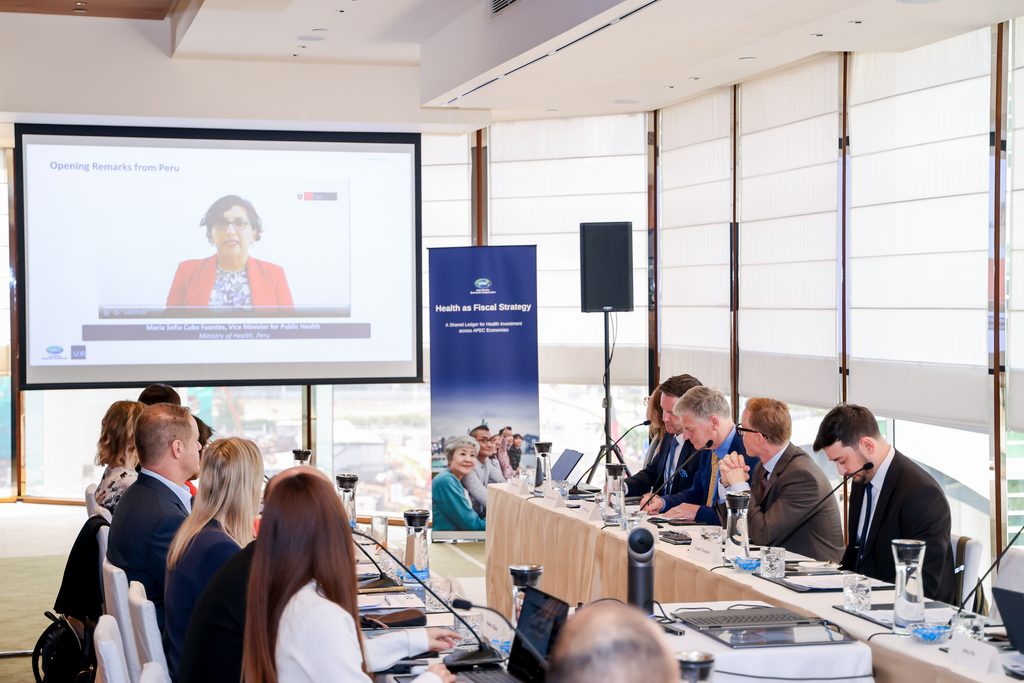
On 21 October 2026, on the margins of the APEC Finance Ministers’ Meeting in Hong Kong, China, Access Partnership convened a policy dialogue to ask why, and what governments can do about it.
Held with the Asian Development Bank (ADB), the dialogue brought together health and finance ministries, development banks, the private sector and academia. It was the first convening under the Health as an Investment initiative, an APEC Health Working Group-endorsed project sponsored by Peru and co-sponsored by Brunei Darussalam and the Republic of Korea. Former New Zealand Prime Minister and Finance Minister Sir Bill English moderated the discussion.
Health affects fiscal performance through workforce participation, productivity and the long-run cost of under-investment. Yet in most budget processes it is still classified as social spending, not investment. The returns are also hard to see. They often land outside the health budget, as higher tax revenue, lower social protection spending, or reduced long-term care costs. The health ministry pays the cost, while other parts of government collect much of the benefit, often years later.
The dialogue identified four priorities.
For finance ministries, the message is not “spend more on health.” It is to appraise health spending with the same rigor and time horizon applied to infrastructure or education, counting returns wherever they occur across government. For health ministries, it means presenting proposals in fiscal terms: what a measure costs, which budgets benefit, and when. For policymakers more broadly, it means aligning how innovation is valued in industrial strategy with how it is assessed for access and reimbursement.
These challenges are common across the region, regardless of income level, and cannot be resolved by any one economy alone.
Insights from the dialogue will inform the final white paper, Health as a Fiscal Strategy: A Shared Ledger for Health Investment Decisions Across APEC Economies, and the development of an APEC Health Return on Investment (HROI) Framework, giving economies a shared method for measuring the fiscal returns of health investment.
Access Partnership will continue working with partners across the region to build the case for health as a driver of economic and fiscal resilience. To request a copy of the initial white paper presented at the policy dialogue, please contact Rachel Perkins at [email protected].









Our dedicated experts, located around the world, are here to help.