

Contact us
Need a problem solved?
Our dedicated experts, located around the world, are here to help.
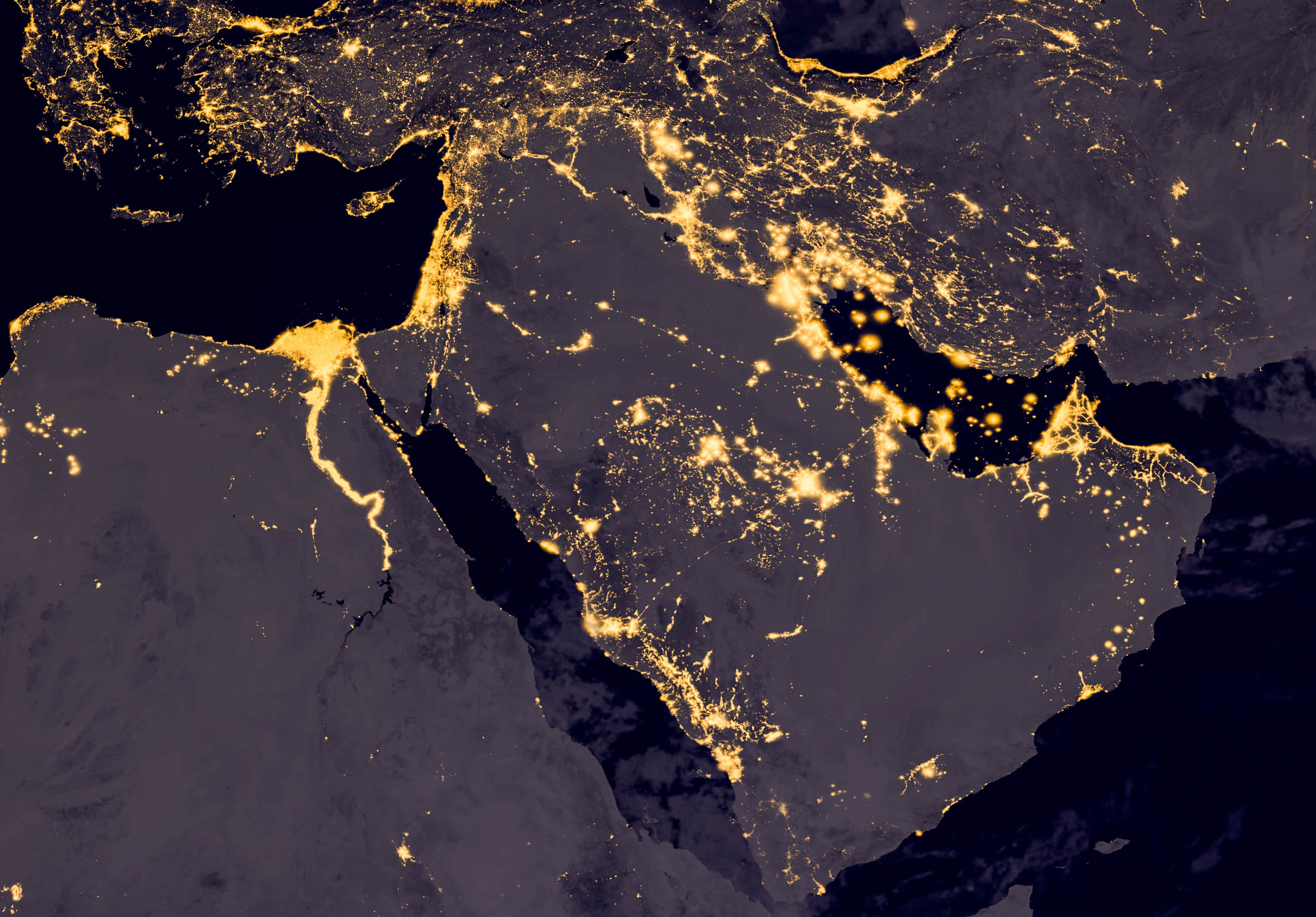
The Middle East entered a new phase of escalation on 28 February when the US and Israel launched a coordinated military campaign targeting Iranian nuclear, military, and leadership assets. The conflict has since spread along Israel’s northern border and into surrounding US- and Israel-allied states in the region. In the Gulf, Iranian strikes have hit not only US military bases but also civilian and commercial targets, including airports, hotels, energy and port facilities, and three Amazon Web Services data centre facilities, highlighting the exposure of digital infrastructure to kinetic escalation.
Yet the region remains economically vital. The Gulf states hold vast sovereign wealth, play a central role in global energy markets, and continue to invest heavily in AI, cloud and data centre infrastructure under long-term diversification strategies. In this context, the crisis is likely to intensify debate over hyperscale deployment risk, data residency, sovereign cloud models and supply chain resilience.
Organisations with exposure in the region have already moved into response mode, shifting workloads, tightening cybersecurity, relocating staff, rerouting logistics, relying more heavily on remote operations, and reviewing supplier dependencies and inventory buffers.
These are necessary short-term measures, but they also show how much infrastructure, connectivity and supply chains in the Gulf were built for a more stable environment than the one companies now face. The four imperatives that follow are about closing that gap.
Navigating these imperatives will depend not just on operational resilience, but on a clear understanding of the regulatory landscape, from satellite licensing and data sovereignty rules to supply chain contingency requirements across multiple jurisdictions.
The concept of a data embassy, storing a nation’s or company’s critical data in a resilient foreign jurisdiction under home-country law and sovereignty protections, was once a theoretical legal construct. In a world defined by Volatility, Uncertainty, Complexity, and Ambiguity (VUCA), it is rapidly becoming a mainstream business necessity for any organisation with business continuity at its core.
This highlights that over-dependence on sovereign infrastructure needs to consider resilience and business continuity (and disaster response) in its planning. This model was pioneered by the 2017 Estonia–Luxembourg Data Embassy Agreement, which enabled Estonia to store critical government data abroad under its own legal jurisdiction, and is now gaining traction in the Gulf through initiatives such as Saudi Arabia’s proposed Global AI Hub framework and the UAE’s sovereign cloud and national data strategy policies.
| Strategic rationale for data embassy architecture |
|---|
| Conflict escalation increases exposure of on-prem and locally hosted data centres to disruption Distributed, sovereign data architectures need operations to continue if primary hosting environments become inaccessible Regulated sectors must ensure continuous protection and availability of sensitive data The cost of establishing data embassy architecture is a fraction of the cost of operational paralysis |
Satellite connectivity, long treated as a contingency option for aviation and maritime use, is becoming an increasingly mainstream resilience requirement for any organisation with operations in a conflict zone. The Middle East remains particularly exposed: the region’s communications infrastructure depends heavily on undersea cable systems that route through or near active conflict zones, including AAE-1, EIG, FALCON, IMEWE, and PEACE Cable, leaving them vulnerable to both deliberate sabotage and incidental damage. A single major disruption can degrade regional connectivity for weeks, as the Red Sea cable cuts of September 2025 demonstrated.
Ukraine’s use of Starlink demonstrated that LEO satellite networks can sustain national-scale operations when terrestrial infrastructure is disabled. The Gulf is now testing a similar proposition in a commercial context but faces a structural constraint: satellite communications remain tightly licensed across the region, with LEO connectivity permitted almost exclusively for aviation and maritime applications.
| Strategic rationale for satellite connectivity as critical infrastructure |
|---|
| Red Sea and Eastern Mediterranean cable routes are now in or near active conflict zones; physical disruption from sabotage or collateral damage is a credible near-term scenario LEO constellations now provide enterprise-grade connectivity with latency comparable to terrestrial broadband, largely immune to airspace closures and maritime disruption An enterprise-grade satellite resilience layer is now accessible at price points justifiable even for medium-sized regional operations |
Modern interstate conflict increasingly includes cyber operations alongside conventional military activity. In the current conflict, Iran has an established history of using cyber operations as a response to military pressure, and Iranian-linked groups have previously targeted energy infrastructure, financial institutions, logistics companies, and cloud service providers across the Middle East, Europe, and North America. State and proxy actors do not limit their targeting to government and defence systems. In a prolonged conflict scenario, private-sector organisations embedded within regional economic systems are equally exposed.
| Cybersecurity considerations |
|---|
| Critical infrastructure sectors (energy, telecommunications, logistics, finance, and cloud services) are likely targets for state-sponsored actors seeking economic disruption, through network intrusion, data theft, disinformation, and disruptive malware targeting both IT and operational systems Vendors, software providers, and cloud services can serve as indirect entry points into corporate networks, making supply chain cyber exposure as significant as direct targeting AI-enabled cyber tools and attacks on identity systems, data integrity, or industrial controls can rapidly escalate incidents and halt operations with little warning |
Global supply chains are typically designed for efficiency. The Gulf crisis is exposing the cost of that design choice. The region sits at the centre of several of the world’s most critical trade corridors: the Strait of Hormuz, the Red Sea, and major aviation hubs linking Europe, Asia, and Africa. Disruptions in these systems cascade rapidly through international logistics networks in ways that affect companies with no direct Gulf presence.
| Supply chain risk factors |
|---|
| Escalation in the Gulf or Red Sea forcing vessel rerouting around the Cape of Good Hope Disruption affects global energy markets and operating costs well beyond the region Aviation disruptions affect both passenger mobility and high-value cargo logistics Concentrated supply chains for semiconductors, cloud hardware, and telecoms equipment leave technology companies particularly exposed to both logistics disruption and capital market volatility |
The four imperatives in this brief are achievable. None of them require technology that does not exist, or budgets that are out of reach for a serious regional operation. What they require is regulatory preparation (e.g., licensing agreements, legal frameworks, bilateral arrangements) that takes months to put in place. The cost of getting this wrong is high: implementing a more responsive and broader communications network supported by NGSO connectivity could mitigate losses worth up to USD$1.21 billion of infrastructure damage annually from natural disasters in the Southern African Development Community (SADC) alone.
In Riyadh, Abu Dhabi, and Doha, emergency frameworks are being written now. The organisations best positioned will be the ones with existing relationships inside those processes and Access Partnership has spent years building exactly those relationships across the Gulf, Europe, and Asia.



Our dedicated experts, located around the world, are here to help.