

Contact us
Need a problem solved?
Our dedicated experts, located around the world, are here to help.
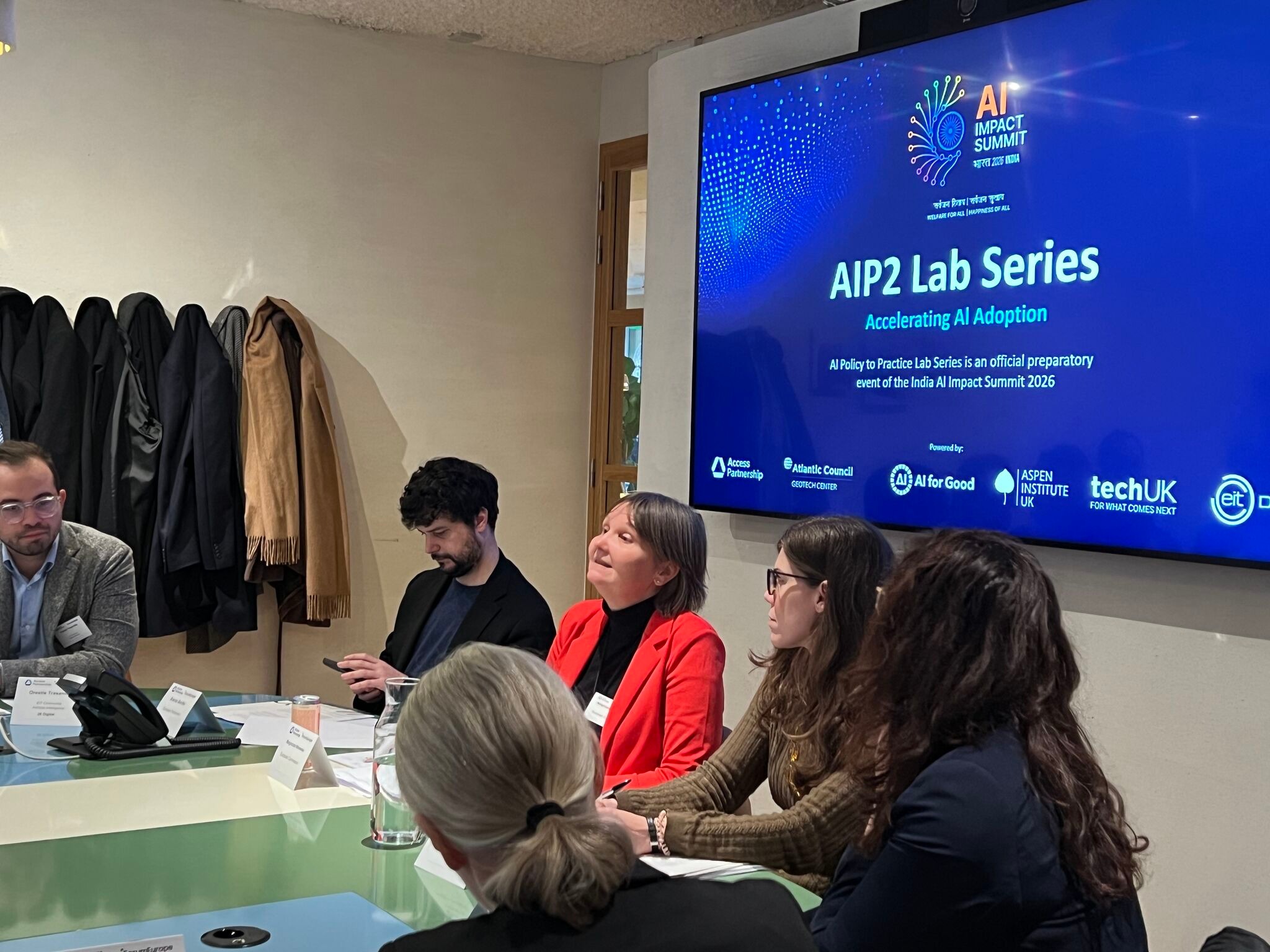
On 29 January 2026, Access Partnership convened the third AI Policy to Practice (AIP2) Lab in Brussels, bringing together representatives from government, industry, and civil society to explore the people and skills dimensions of AI diffusion, a critical driver in ensuring that economies not only adopt but truly absorb AI technologies.
The discussion focused on four key themes: the funding, making it a reality by moving from principles to practice, AI diffusion for all including SMEs, and what does this mean for the AI Impact Summit to be held in India. Across the discussions, participants examined the global evolution of AI governance with a focus on the EU and the EU’s AI Act, exchanged ideas on how to operationalise AI governance inside organisations, and assessed the investment, workforce, and regulatory challenges that continue to shape AI uptake across regions.
A central question throughout the Lab was who should pay to upskill the workforce as AI reshapes labour markets. Participants debated the balance of responsibility between governments and the private sector, noting that aligned incentives will be essential to enable continuous, lifelong learning. A critical factor in stimulating funding is to demonstrate a real return on investment; while individual use of AI has increased in the EU for example, it was felt by many that companies overall are not yet feeling the benefit or efficiencies that AI use should bring.
The rollback of Article 4 (AI literacy) in the EU AI Act sparked discussion on how to close the gap between principles and implementation. Participants stressed that while AI is increasingly used for tasks requiring limited human judgment, strong foundations in AI literacy remain critical to build trust. It was noted that people tend to avoid using the tools they don’t trust.
SMEs and organisations outside the tech sector remain hesitant to invest in AI literacy and workforce transformation – with again, many remaining unconvinced about the return on investment and struggle with the complexity of compliance and governance structures.
The group examined how organisations can transition from aspirational “AI principles” to operational governance frameworks, particularly as regulatory expectations evolve. Participants highlighted widespread global interest- from Japan, Brazil, Africa, and the United States- in Europe’s regulatory journey. While the “Brussels effect” remains strong, delays in standards development risk diluting the EU’s influence in shaping global AI norms.
The group reflected on what the evolving regulatory landscapes mean for Europe, the United States, and the Global South, particularly ahead of the India Summit. While unified frameworks like the EU AI Act offer clarity, global regulatory approaches are increasingly diverging, raising concerns around interoperability, compliance costs, and barriers to cross‑border innovation. Participants discussed how to maintain open innovation corridors and uphold European values while remaining economically competitive.
In closing, participants reaffirmed that the challenge is not only about accelerating AI adoption but enabling broad‑based AI diffusion – ensuring people, workers – have the right skills to reap the benefits that the evolving technology can bring to all parts of society through inclusive governance, trust‑building, and sustained cooperation.



Our dedicated experts, located around the world, are here to help.