Contact us
Need a problem solved?
Our dedicated experts, located around the world, are here to help.
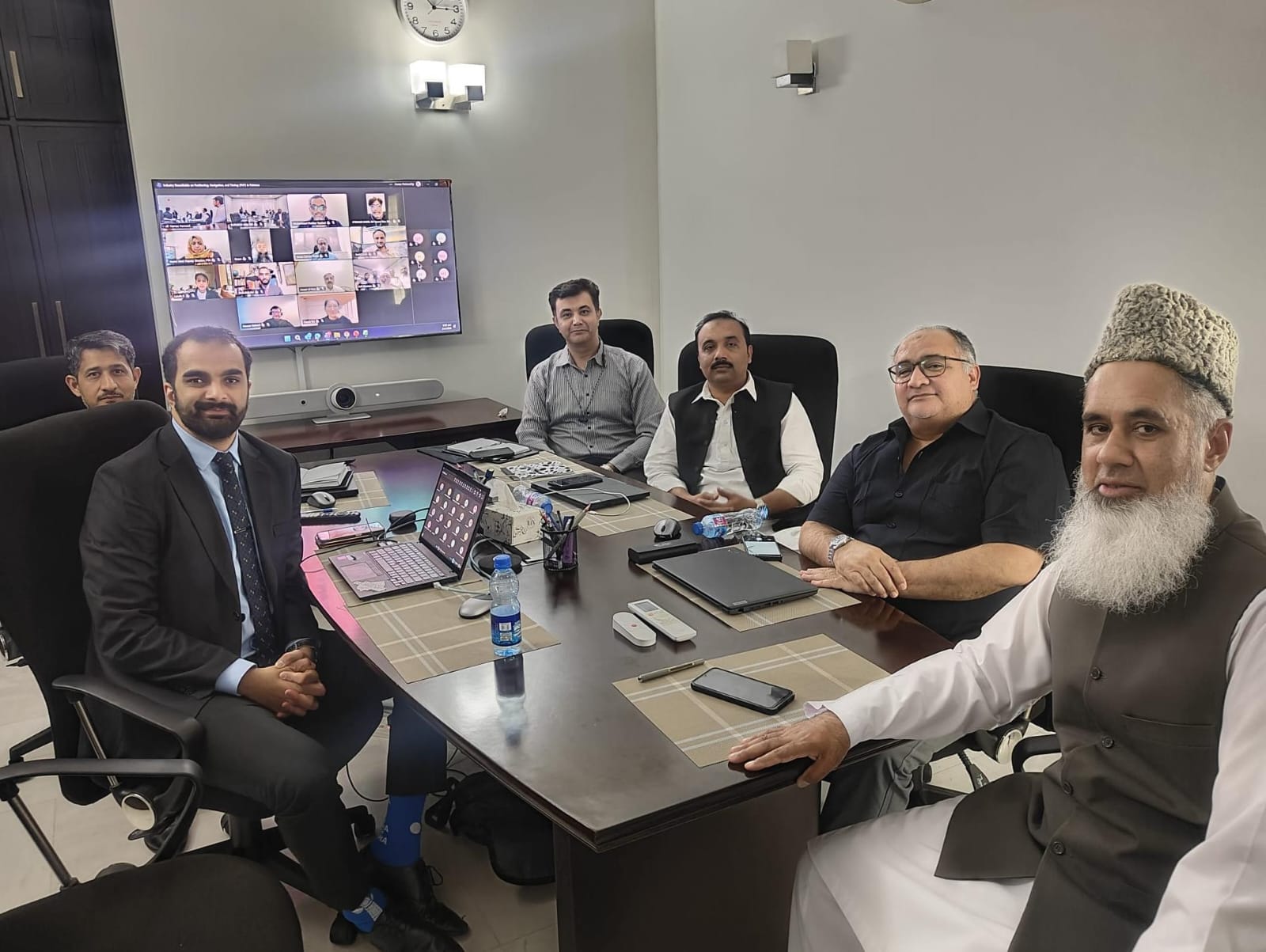
Earlier this month, the Pakistan Space Activities Regulatory Board (PSARB), together with Access Partnership in its role as the appointed consultant, concluded a significant week of engagements in Islamabad dedicated to advancing the development of Pakistan’s regulatory framework for Positioning, Navigation and Timing (PNT) and strengthening the foundations of a more resilient national PNT ecosystem.
Bringing together key public sector institutions, industry stakeholders, and international experts, the programme focused on the design of a modern, transparent, and enabling regulatory environment that reflects international best practices while responding to Pakistan’s national priorities. This work forms part of PSARB’s broader mandate to develop a regulatory framework for PNT in Pakistan, including benchmarking, gap analysis, market trends, and regulatory instruments.
PSARB and Access Partnership convened a high-level regulatory roundtable attended by representatives from more than ten government agencies involved in the governance, use, and protection of PNT-related services and infrastructure.
The discussions examined international regulatory approaches to Global Navigation Satellite Systems (GNSS) and related augmentation systems, the institutional responsibilities relevant to PNT in Pakistan, and the role of regulation in supporting reliability, resilience, and trust in these capabilities. The workshop also explored the importance of PNT across aviation, maritime navigation, land mobility, critical infrastructure, financial systems, and national security, reflecting the broad cross-sector significance of PNT services.
A key theme emerging from the discussions was the need for stronger coordination across the various organisations in Pakistan that have a role in the PNT ecosystem. Participants highlighted that, given the cross-cutting nature of PNT, effective governance will require closer alignment between regulatory, technical, operational, and sector-specific authorities.
A second major takeaway was the growing importance of resilient PNT. Discussions underlined that Pakistan should not view PNT solely through the lens of satellite navigation today, but should also prepare for future needs by considering resilience, redundancy, and the evolution of new technologies. This includes greater attention to alternative and complementary systems, as well as emerging future-facing models such as multi-orbit architectures.
PSARB and Access Partnership also held an online industry roundtable on PNT regulation, bringing together more than 25 participants from across the PNT value chain. This included foreign and local companies, users of PNT services, and government stakeholders, reflecting the diverse ecosystem that depends on reliable positioning, navigation, and timing capabilities.
During the session, Access Partnership presented the benchmarking analysis of PNT regulatory regimes across ten countries, alongside the emerging implications for Pakistan’s institutional and regulatory framework. The roundtable facilitated discussion on market needs, operational challenges, international good practice, and the kinds of reforms needed to support both innovation and resilience in Pakistan’s PNT environment.
Participants emphasised that PNT should not be treated as a niche or purely technical issue, but as an essential enabling capability that underpins modern transport, communications, finance, emergency response, and wider economic activity. They also stressed that a future-ready framework for Pakistan will depend not only on regulatory clarity, but also on institutional coordination, protection against harmful interference, and a forward-looking approach to resilient PNT and new technological developments.
These activities mark an important milestone in PSARB’s work to support the emergence of a secure, resilient, and future-ready PNT framework in Pakistan. They also reinforced two central messages, the importance of better coordination across Pakistan’s PNT-related institutions, and the need to begin planning now for resilient PNT and the technologies that will shape the sector in the years ahead.
At Access Partnership, we continue to support this journey by delivering technical, legal, and international regulatory expertise tailored to Pakistan’s national priorities.




Our dedicated experts, located around the world, are here to help.