


Contact us
Need a problem solved?
Our dedicated experts, located around the world, are here to help.
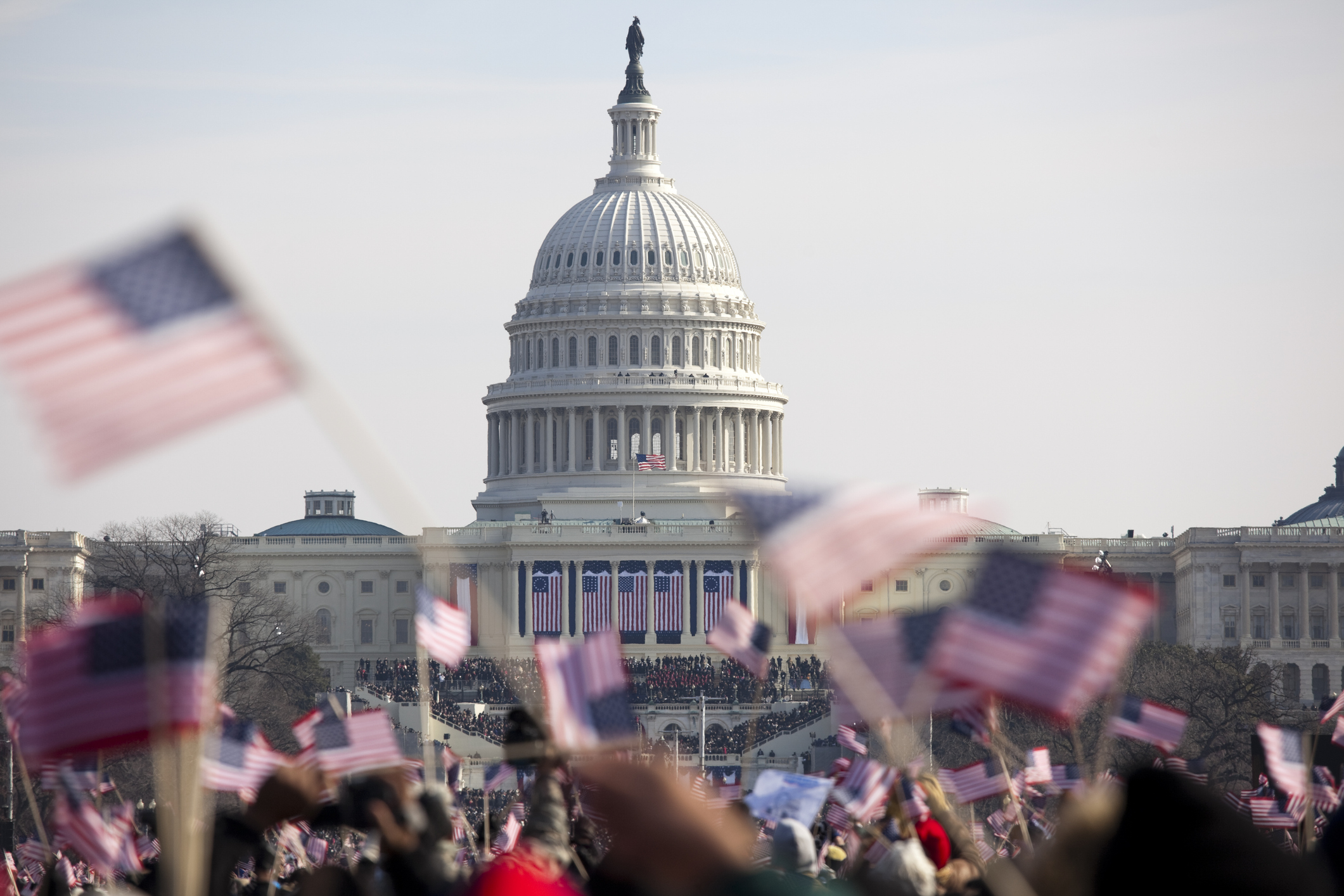
A Democratic wave reshaped Congress on November 3, giving the party control of the House of Representatives and Senate for President Donald Trump’s final two years in office. These victories give the party greater authority to scrutinize the administration and constrain its legislative agenda for the remainder of Trump’s term.
Democrats regained control of the U.S. House of Representatives and are projected to secure approximately 258 seats overall, well above the 218 needed for a majority, with 231 seats called for Democrats and 144 for Republicans and 60 races still uncalled (at time of publication). When the new Congress convenes in January, Democrats will take control of House committees and gain subpoena power to pursue their promised investigations into the administration and its allies. Their majority will also give them leverage over government spending, requiring the White House to negotiate funding agreements or risk a government shutdown.
The incoming Speaker of the House, Hakeem Jeffries, has said that Democrats would focus on four areas: reversing cuts to Medicaid, extending the Affordable Care Act credits, restoring congressional authority related to tariffs, and stopping Trump’s war with Iran. Much of Democrats’ legislative agenda is likely to focus on building public support for their priorities ahead of the 2028 election.
Democrats regained control of the U.S. Senate and are projected to hold 55 seats to Republicans’ 45. Their majority will give them control over Senate confirmation of the president’s choices for senior administration roles and federal judgeships. This could slow appointments and help Democrats secure nominees’ commitments on policy and enforcement.
Democrats will also control which legislation reaches the Senate floor, allowing them to block Republican proposals and advance alternatives. However, a 55-seat majority would fall short of the 60 votes generally needed to overcome a filibuster, requiring Republican support for most legislation. Senate control will therefore give Democrats greater power to shape the administration’s personnel and policy choices, even where their own legislation has little prospect of becoming law.
Tuesday’s results will bring greater scrutiny of AI policy after Washington largely focused on accelerating development and deregulation. With Democrats controlling Congress, lawmakers will press developers on safety, security breaches, data center development, competition, algorithmic pricing, children’s safety, and more. Democrats are already calling for AI executives to testify under oath, signaling a more confrontational relationship between Congress and the industry. Sweeping legislation, however, could face White House opposition.
Voter backlash against data centers and infrastructure build-out will intensify scrutiny of project financing and shift focus to household electricity costs. Officials may demand that developers secure power and fund grid connections, while the industry pushes for tariff relief to lower construction costs.
Competition with China will remain a focus, with lawmakers potentially asking U.S. developers how Chinese companies are copying their models and what protections could prevent this. Congress could also examine proposals for U.S.-China cooperation on AI safety, including inspections of advanced AI facilities and agreed procedures for shutting down systems that pose serious risks.
Debate over AI “kill switch” legislation could expose divisions among Democrats over how to require safeguards without constraining innovation or weakening U.S. competitiveness with China. These efforts would test Washington’s ability to balance national security and tighter oversight with the administration’s push to accelerate AI development and maintain U.S. technological leadership.
Bipartisan permitting reform offers a more plausible path to enactment than sweeping environmental legislation. The Bipartisan American Affordability and Jobs Act would speed up energy-project approvals, expand transmission and protect existing permits, drawing support from renewable-energy companies but opposition over weaker environmental safeguards. Democrats could strike a deal this year or use their incoming majority to push for stronger limits on fossil-fuel expansion.
Democrats could also pursue the restoration of clean-energy tax incentives curtailed under President Trump, although broad reversals would face White House resistance. Narrower changes may offer more room for negotiation. Proposals such as the Forever Chemical Regulation and Accountability Act, which would restrict nonessential PFAS uses and environmental releases, could receive greater attention under Democratic leadership. However, the bill remains at the introduction stage and should be viewed as a policy priority rather than a likely legislative outcome.
Democratic control of Congress will bring new leadership to the Appropriations Committees, reshaping the direction on federal research funding, oversight, and higher education policy. Democrats are expected to seek stronger protections against research grant terminations, restrictions on indirect costs, and changes to federal grant administration. The Scientific Integrity Act (S. 4545), which seeks to protect scientific decision-making from political interference and prioritize expertise in federal scientific appointments, could receive renewed attention. Similarly, the bipartisan AI-Ready Bio-Data Standards Act (S. 4069) and its Democratic-sponsored House companion (H.R. 7907), which aim to make federally funded biological datasets AI-ready within two years, could gain momentum. Conversely, Democrats may seek to replace Republican spending proposals under the Commerce, Justice, Science Appropriations Act (H.R. 8845), particularly provisions reducing funding for NASA and NSF. However, presidential veto authority and Senate procedural requirements will continue to constrain legislative action.
Democratic control of Congress will bring closer scrutiny of U.S. military operations in Iran, following voter frustration over the war’s effect on fuel prices and living costs. Democrats are expected to question administration officials about the war’s objectives, costs, and legal justification, while pursuing legislation to end hostilities and restrict additional military funding. U.S. arms sales and security assistance to Israel and Gulf states, alongside sanctions on Iran, could also face review. However, Trump’s veto power and Democratic divisions over an alternative Iran strategy could limit their ability to shift policy in the region.
Congress could also scrutinize deals giving Saudi Arabia and the UAE access to advanced U.S. AI chips. Lawmakers have warned that inadequate safeguards could allow China to exploit the technology through Gulf partners. Rather than seek to unwind existing agreements, Democrats could press for tighter safeguards and reporting requirements on future chip exports and AI partnerships.
Democrats are likely to shape space policy primarily through funding and congressional oversight. Key issues include NASA’s priorities and authorities, FY2027 appropriations, and the administration’s proposed defense expansion. The administration is seeking USD 1.5 trillion for defense, including approximately USD 71 billion for the Space Force and USD 17.5 billion for the Golden Dome missile defense initiative. Nearly all the proposed Golden Dome funding would require Congress to approve a separate spending bill. Missile warning and space-based surveillance could provide areas for agreement, even as lawmakers scrutinize the scale, priorities and funding of the broader proposal.
Congressional oversight could intensify for commercial space providers. Following restrictions on Ukrainian forces’ access to SpaceX’s Starshield satellite communications service, House Democrats pledged to examine federal funding awarded to Elon Musk’s businesses, compliance with contractual obligations, and safeguards against political interference and arbitrary service restrictions. Lawmakers also want to establish who authorized the restrictions; responsibility remains disputed. These inquiries could influence how the government negotiates and oversees commercial space contracts, particularly for services critical to military operations and national security.
A broad congressional overhaul of President Trump’s tariff authority is unlikely to overcome his veto. Doing so would require two-thirds support in both chambers, including substantial Republican backing. That limits the prospects for proposals such as the Congressional Trade Powers Reform Act of 2026 (S.5081), which would require congressional approval for trade actions under Sections 232, 301 and 201/203, repeal Sections 122 and 338, and strengthen oversight of the US Trade Representative. We therefore expect Democrats to have more success pressing for targeted tariff reductions linked to affordability than fundamentally rewriting presidential trade powers.
Export controls offer a stronger bipartisan foundation for congressional action. The SAFE Chips Act (S.3374) would prohibit licences for specified advanced data-centre chips destined for China, Russia, Iran and North Korea. The MATCH Act (H.R.8170 / S.4281) would tighten controls on semiconductor manufacturing equipment and seek equivalent restrictions from allies. Both proposals have Republican and Democratic backing and, if enacted, would constrain the administration’s ability to offer access to sensitive technology in trade negotiations.



Our dedicated experts, located around the world, are here to help.