Contact us
Need a problem solved?
Our dedicated experts, located around the world, are here to help.
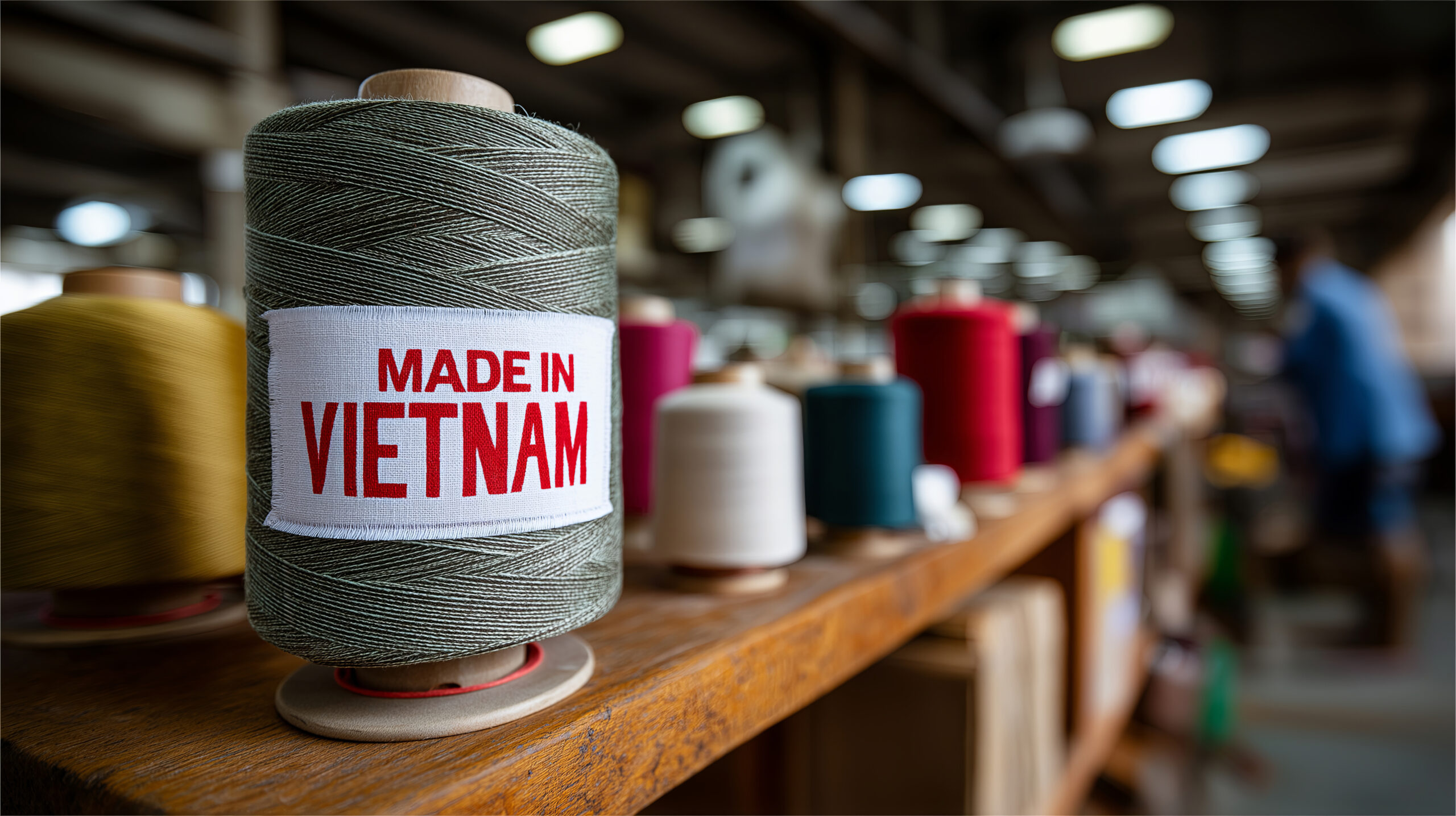
Vietnam has emerged as a leading global exporter, driven by sustained economic reform, expanding manufacturing capability, and deep integration into global value chains.[1] Building on this foundation, furniture and fashion have become flagship export sectors, positioning Vietnam among the top three exporters globally in categories like wooden furniture and apparel.[2] In 2024 alone, Vietnam’s overall furniture exports reached VND 343 trillion, while overall fashion exports totalled VND 1,661 trillion, underscoring the scale and global significance of these industries.[3] As global trade becomes increasingly digital, a structural shift is underway. E-commerce exports are no longer a complementary channel, but the next frontier of growth for Vietnam’s furniture and fashion industries.
Micro, small, and medium-sized enterprises (MSMEs) are central to Vietnam’s export ecosystem, particularly in furniture and fashion. E-commerce exports provide these firms with a pathway to build their own brands, test new designs with lower upfront risk, and access high-value markets without establishing overseas retail or distribution infrastructure.
However, our 2025 survey with 300 MSMEs in Vietnam revealed that while e-commerce exports create strong opportunities for international expansion, firms face persistent structural barriers. These include high cross-border logistics costs, complex regulatory requirements in export destinations, knowledge gaps in e-commerce business models and regulations, and capability constraints such as shortages in logistics expertise and platform integration skills, with over 84% of surveyed MSMEs reporting these challenges.
Vietnam is strengthening the policy and institutional framework needed to support the next phase of e-commerce export growth. Initiatives such as the 2026–2030 National E-commerce Development Master Plan, emerging Free Trade Zones (FTZs) designed to streamline trade and logistics processes, and public–private initiatives such as “V-Brands Go Global with Amazon,” reflect Vietnam’s efforts to build a stronger ecosystem for digital exports.
In this report, building on these developments, we examine how targeted measures can further accelerate MSME participation in global digital trade.
This report was sponsored by Amazon.
[1] Sources include: Vo Tri Thanh (2020), Viet Nam: Transition to a Social-Oriented Market Economy. Available at: https://www.eria.org/uploads/8_ch_4-Transition-to-Social-Oriented-Market-Economy.pdf
[2] Sources include: World Bank (n.d.), “Manufacturing, value added (% of GDP) – Vietnam.” Available at: https://data.worldbank.org/indicator/NV.IND.MANF.ZS?locations=VN; WTO Center (2024), “Integration positions Vietnam as key part of global supply chain.” Available at: https://wtocenter.vn/rcep-market/27000-integration-positions-vietnam-as-key-part-of-global-supply-chain; USDA Foreign Agricultural Service (2020), Vietnam Wood Processing Industry. Available at: https://apps.fas.usda.gov/newgainapi/api/Report/DownloadReportByFileName?fileName=Vietnam+Wood+Processing+Industry_Ho+Chi+Minh+City_Vietnam_06-11-2020
[3] Overall exports encompass all product shipments, covering both business-to-consumer (B2C), direct-to-consumer (D2C), and business-to-business (B2B) models, which move through both e-commerce and non-e-commerce channels.





Our dedicated experts, located around the world, are here to help.